

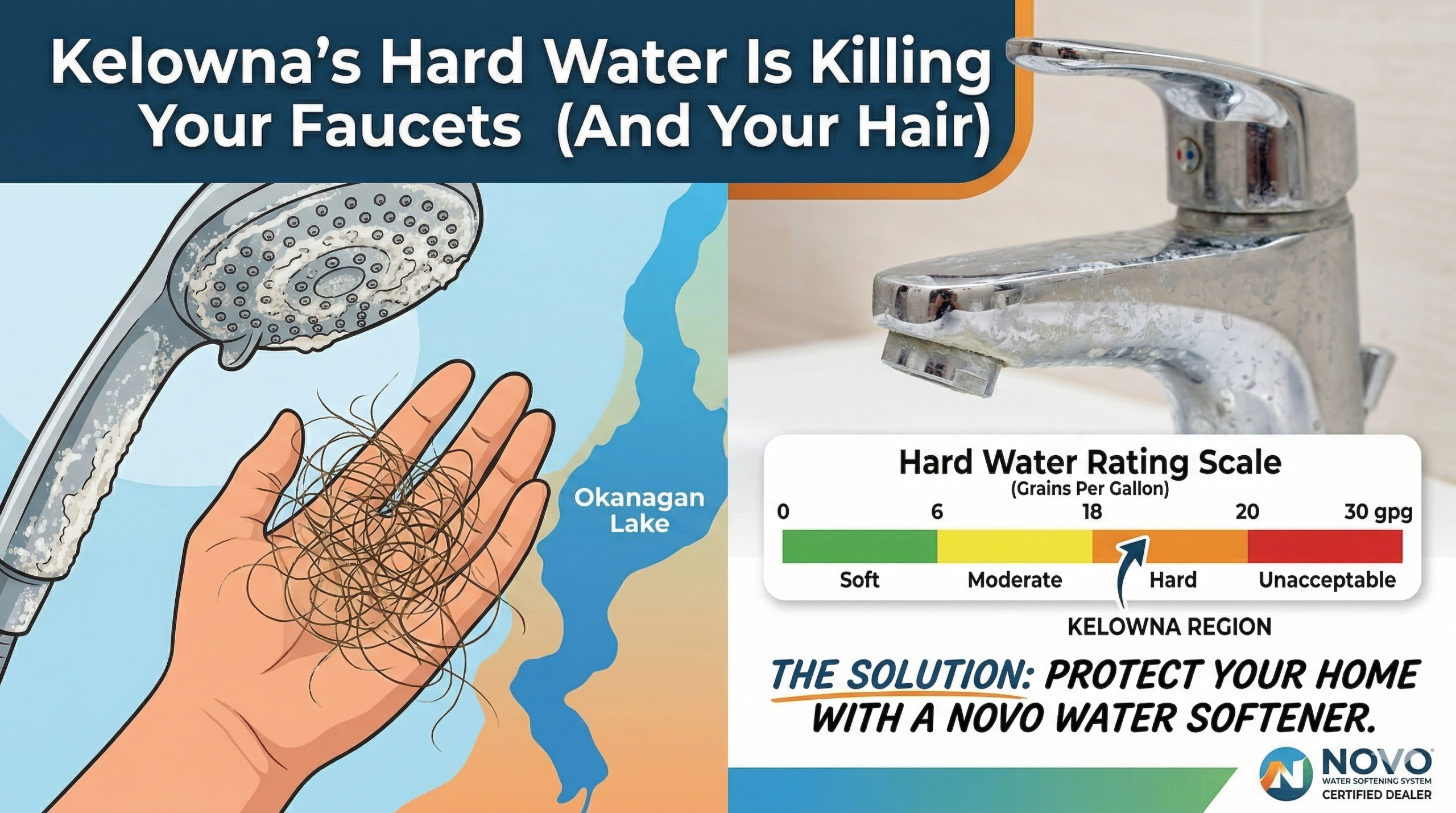
Quick Answer: Kelowna water hardness is caused by high levels of calcium and magnesium that lead to scale buildup in plumbing and appliances. Installing a water softener helps protect faucets, improves water quality, and reduces skin and hair irritation.
What is the Definition of “Hard Water”?
Water hardness refers to the concentration of dissolved minerals (primarily calcium and magnesium) in your water. In the Okanagan, utilities measure this in two ways: milligrams per litre (mg/L), which represents the physical weight of the minerals, and grains per gallon (gpg), which is the standard measurement used to calibrate water softeners. To convert these, you divide the mg/L by 17.1 to get the gpg. Based on the classification standards used in Kelowna, your water falls into one of these four categories:- Soft: 60 mg/L (3.5 gpg) or less.
- Moderate: 61–199 mg/L (3.6–11.6 gpg). Most City of Kelowna customers fall here.
- Hard: 200 mg/L (11.7 gpg) or more. This is the threshold where “scale” begins to rapidly destroy faucets and water heaters.
- Unacceptable: 500 mg/L (29 gpg) or more.
How Hard is Kelowna’s Water Supply?
Because Kelowna is served by multiple different water utilities, your hardness level depends heavily on your neighborhood:- City of Kelowna water hardness: Averages 110–130 mg/L (6.4–7.6 gpg). This is considered Moderate and is typical for homes drawing from the Okanagan Lake intake.
- Glenmore-Ellison (GEID) water hardness: Varies by source. Okanagan Lake water is Moderate (~128 mg/L or 7.5 gpg ), while the Airport Wells reach up to 182 mg/L (or 10.6 gpg), which is at the very high end of Moderate.
- Rutland Waterworks water hardness: Reliably the hardest water in the city due to its 100% groundwater source. 2026 testing shows averages of 193–220 mg/L (11.3–12.9 gpg). This neighborhood sits right on the edge of the Hard category.
- Black Mountain (BMID) water hardness: Hardness varies by source. January 2026 testing showed a Hard high of 216 mg/L (12.6 gpg) at Well #4, while the Pearson School sample (surface water) was only Moderately Hard at 72.5 mg/L (4.2 gpg).
How Hard Water Causes Scale Buildup
When hard water is heated or evaporates, minerals are left behind as scale buildup. This chalky residue sticks to faucets, showerheads, pipes, and appliances. Neighborhoods like West Kelowna and Glenmore often experience some of the most significant mineral deposits due to their specific groundwater sources. Over time, scale buildup can:- Restrict water flow
- Reduce appliance efficiency
- Damage fixtures
- Shorten the lifespan of plumbing equipment
What Hard Water Does to Your Hair and Skin
Hard water doesn’t rinse cleanly. Soap reacts with minerals, leaving a film known as “soap scum” behind on your skin and hair. Common signs include:- Dry, itchy skin
- Dull or brittle hair
- Soap that doesn’t lather well
- A sticky or filmy feeling after showering
Why a Water Softener Makes a Difference
A water softener removes excess calcium and magnesium through a process called ion exchange before water enters your home’s plumbing system. This stops scale buildup at the source rather than treating symptoms after damage occurs. As a certified Novo dealer, we recommend high-efficiency water softener systems that are specifically calibrated for local Okanagan water conditions.Benefits of Softened Water
Softened water:- Protects faucets and appliances
- Improves soap performance
- Leaves hair and skin feeling cleaner
- Extends plumbing system lifespan
The Hidden Cost of Hard Water
Without treatment, hard water affects plumbing systems, including increases to:- Appliance energy use
- Maintenance and repair costs
- Fixture replacement frequency
Is Hard Water a Problem in Every Kelowna Home?
Water hardness levels can vary depending on location and water source, but many Kelowna homes experience moderate to high hardness. A professional water test is the best way to confirm whether scale buildup is affecting your plumbing.Fix the Water, Not the Symptoms
Replacing faucets or buying new hair products won’t solve hard water problems long-term. Addressing Okanagan water hardness at the source protects your plumbing—and improves everyday comfort throughout your home.Kelowna Hard Water FAQs
Many Kelowna homes experience moderate to high water hardness due to naturally occurring minerals, with many areas measuring between 5 and 7 grains per gallon (gpg), and up to 13 gpg in Rutland.
Scale buildup is calcium and magnesium residue left behind when hard water evaporates or is heated.
Yes, scale buildup can clog pipes, damage fixtures, and reduce appliance efficiency over time.
A water softener prevents new scale from forming and can help reduce existing buildup by removing the minerals that cause it.
Yes, softened water allows soap to rinse cleanly without leaving soap scum, improving skin comfort and hair texture.
Yes. By removing the “metallic” or “chalky” minerals like calcium and magnesium, softened water typically tastes smoother or “cleaner” to most people. However, because a softener uses a small amount of sodium during the ion exchange process, individuals on low-sodium diets often pair their softener with a Reverse Osmosis (RO) system under the kitchen sink for the best-tasting drinking water.