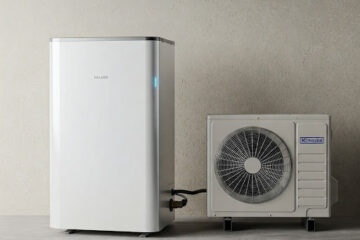


Quick Answer: A tankless water heater provides on demand hot water by heating water only when it’s needed, eliminating the limits of a storage tank. When properly sized and installed, it can deliver continuous hot water for most Okanagan households.
What Is a Tankless Water Heater?
A tankless water heater heats water on demand rather than storing it in a tank. When you turn on a tap, cold water flows through a high-powered heating element, or gas burner, and is warmed instantly. This means you get on demand hot water without waiting for a traditional hot water tank to refill and reheat.The Benefits of On Demand Hot Water
Homeowners often choose a tankless water heater because it offers:- Continuous hot water for showers and appliances
- Improved energy efficiency (and lower utility bills) compared to tank systems
- Reduced risk of catastrophic leaks from stored water Longer system lifespan (often 20+ years compared to 10-15 years for tanks)
When a Tankless System May Not Be the Best Fit
While tankless systems are efficient, they do have limits. If multiple hot water fixtures run simultaneously, the system’s flow rate (Gallons Per Minute or GPM) capacity can be stretched. Homes with high simultaneous demand or older gas and electrical setups may need panel or gas line upgrades to support a tankless water heater properly. Additionally, hard water in parts of the Okanagan requires regular system descaling. Because tankless systems heat water rapidly through narrow channels, calcium and magnesium from hard water bake onto the heat exchanger much faster than in a traditional tank. If left untreated, this scale buildup restricts water flow, triggers error codes, and drastically shortens the lifespan of the unit. To protect your investment and maintain the manufacturer warranty, an annual professional vinegar flush is essential.Tankless Water Heater Sizing Matters
Proper sizing is critical. A system that’s too small won’t deliver consistent performance, no matter the brand.Most residential tankless units range from 5 to 11 Gallons Per Minute (GPM). As a general guideline, a smaller 5 to 7 GPM unit can typically support a single shower and an appliance simultaneously, making it suitable for 1-to-2 bathroom homes. Larger households needing to run two showers and a washing machine at once will usually require an 8 to 11 GPM unit. However, sizing isn’t just about counting taps. A professional assessment considers:- Number of bathrooms and simultaneous users
- Fixture flow rates
- Household water usage patterns
- Incoming groundwater temperature (which can get very cold during Okanagan winters, significantly reducing a heater’s maximum GPM output)
Navien vs Rinnai: What’s the Difference?
Navien vs Rinnai is one of the most common comparisons homeowners research. Both manufacturers are known for reliable, high-efficiency tankless water heaters. Navien is often praised for its stainless steel heat exchangers and built-in recirculation pumps, while Rinnai is famous for its durable copper heat exchangers and extreme longevity. The right choice depends less on brand and more on:- System sizing for your specific home
- Installation quality
- Maintenance support
- Warranty coverage
Installation Makes or Breaks On-Demand Hot Water Performance
Even the best tankless water heater won’t perform properly without correct installation. Venting, gas supply lines (which often need to be upsized), and water pressure must all be configured correctly. Local Kelowna professional installation ensures safety, efficiency, and long-term reliability that complies with BC building codes.Is a Tankless Water Heater Right for Your Family?
If your household values continuous hot water, energy efficiency, and long-term performance, a tankless water heater may be a smart upgrade. A hot water system consultation helps determine whether your home’s infrastructure and usage patterns are a good match for this technology. Whether you’re in Kelowna, West Kelowna, Lake Country, Vernon, Penticton, Peachland, or Summerland, Vision Plumbing Heating Cooling can help you!A tankless water heater heats water on demand instead of storing it in a tank, providing continuous hot water. By using a high-powered gas burner or electric element to heat the water as it passes through a heat exchanger, it eliminates the standby energy loss associated with traditional 40 or 50-gallon tanks.
It can, as long as the system is properly sized for your household’s usage. Sizing is determined by the required Gallons Per Minute (GPM) and the temperature rise needed to heat cold Okanagan groundwater to your desired shower temperature.
Yes, tankless systems are generally more energy efficient because they only heat water when needed.
Yes, regular maintenance helps prevent scale buildup and ensures long-term efficiency. In areas with hard water, annual descaling (flushing the system with a vinegar solution) is highly recommended to protect the heat exchanger and maintain your manufacturer warranty. Professional plumbing companies can assist with emergency or regular water heater maintenance.
If you skip regular descaling, mineral buildup from hard water will coat the heat exchanger. This causes the system to work harder, wasting energy, reducing hot water output, and eventually triggering an error code that shuts the system down to prevent overheating.
Yes! For very large homes or commercial properties with exceptionally high hot water demands, multiple tankless units can be “cascaded” or linked together. A local professional can design a multi-unit system that communicates perfectly to meet your maximum flow rate.
To properly size a tankless water heater, calculate your peak hot water demand by adding the Gallons Per Minute (GPM) of all simultaneously running fixtures. Then, determine your required temperature rise by subtracting the cold Okanagan groundwater temperature from your target hot water temperature. Match both numbers to a unit’s maximum capacity. A professional can handle this for you!