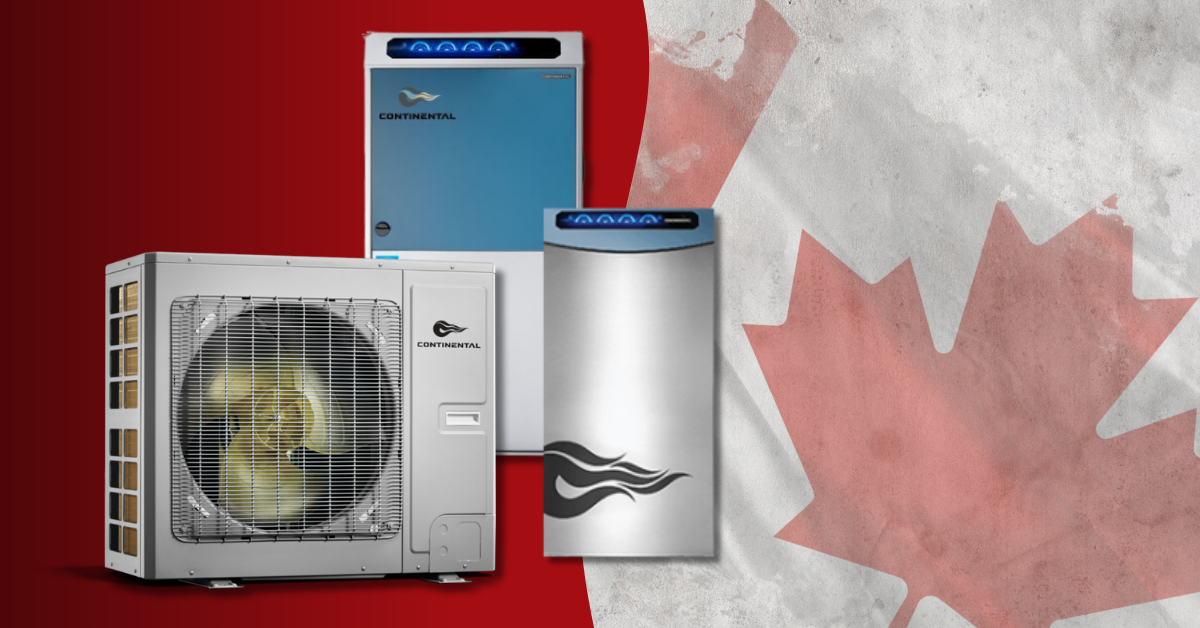
Quick Answer: For most Kelowna homes in 2026, the dual fuel vs. all-electric decision comes down to your existing gas service and how you weigh upfront cost against operating cost. A dual fuel system pairs a heat pump with a gas furnace for cold-snap backup, while an all-electric heat pump removes gas entirely. Both heat and cool efficiently in the Okanagan. The right choice depends on your home, not a one-size answer.
Renovating or replacing your heating system in Kelowna this year usually surfaces the same fork in the road: go with a dual fuel hybrid that keeps a gas furnace as backup, or commit to an all-electric heat pump. It’s the single most common debate we see on Okanagan renovations, and the marketing on both sides can muddy it. This comparison lays out how each system actually behaves in our climate, what drives the operating cost, and how the 2026 rebate picture factors in, so you can match the system to your home rather than the hype. If you’re still working out whether a heat pump makes sense over a straight AC replacement, our heat pump vs. air conditioner guide covers that earlier decision first.
How each system works
Dual fuel (hybrid)
A dual fuel system combines an electric air-source heat pump with a high-efficiency gas furnace, run by a single set of controls. Above a set outdoor temperature (the “balance point”) the heat pump handles heating efficiently and provides cooling in summer. When it gets cold enough, the system switches to the gas furnace, which delivers strong heat on the coldest Okanagan nights. You get the everyday efficiency of a heat pump with the cold-weather muscle of gas.
All-electric heat pump
An all-electric setup uses a heat pump for both heating and cooling and removes gas from the equation entirely. Modern cold-climate heat pumps maintain useful heating output well below freezing, which makes all-electric far more viable in the Okanagan than it was a decade ago. For homes heated by electric baseboards or an electric furnace today, switching to a heat pump can sharply cut electricity use, because a heat pump moves heat rather than generating it from scratch.
Which fits the Okanagan climate?
Kelowna winters are real but moderate by Canadian standards, with cold snaps rather than months of deep freeze. That matters, because it’s exactly the climate where both systems can work. The question is how you want to handle the coldest days.
A dual fuel system leans on gas for those cold snaps, so the heat pump never has to strain at its limit and you always have a high-output backup. An all-electric cold-climate heat pump can carry a Kelowna winter on its own when it’s correctly sized and a proper heat-loss calculation is done for your home — but sizing and installation quality matter more, because there is no gas furnace to lean on. If you want to understand how different cold-climate models perform under those conditions, our 2026 cold climate heat pump buyer’s guide walks through the key specs. Both setups also cover summer, so this decision doubles as your air conditioning plan. This is why a professional load calculation is not optional for either path. It’s the difference between a system that’s comfortable and one that struggles.
Operating cost: the real deciding factor
Day to day, both systems run primarily on the heat pump, so both are efficient most of the year. The cost difference shows up at the extremes and depends on the relative price of gas versus electricity.
- Dual fuel can be cheaper to run during deep cold if gas is inexpensive relative to electricity, because the furnace takes over exactly when a heat pump is least efficient. You keep two utility connections, though, including gas service fees.
- All-electric eliminates the gas bill and its fixed charges entirely, which can simplify your costs, but your winter heating then rides fully on electricity rates. For a home already heated by electric baseboards, the move to a heat pump usually lowers electricity use enough to be a clear win.
There’s no universal winner here, which is the honest answer most comparison articles avoid. The math turns on your current fuel, your home’s efficiency, and local utility rates.
What about rebates in 2026?
Rebates can move the numbers, but the programs change often, so treat any figure as something to confirm before you buy, not a guarantee. Heat pump and dual fuel incentives in BC are delivered through FortisBC, BC Hydro, and CleanBC, and eligibility depends on your current heating fuel, your account type, and the specific equipment on the approved product list. Our residential rebates page tracks what’s currently available, but the most reliable way to know what you qualify for is a conversation before you purchase.
A few principles hold regardless of the exact dollar amounts. Rebates generally require equipment from an approved list, installation by a Technical Safety BC licensed contractor, and in many cases that you are replacing an older system. Program amounts and deadlines have shifted over the past year, and some offers have closed or been replaced. Rather than chase a number that may be out of date, the practical move is to confirm current eligibility for your exact situation before committing — which is part of what we do during a system consultation.
So which one wins?
For a Kelowna home that already has gas service and a furnace nearing end of life, dual fuel is often the path of least resistance: you add heat pump efficiency and cooling while keeping reliable cold-snap backup. For a home on electric baseboards, or a homeowner who wants to drop gas entirely, a well-sized all-electric cold-climate heat pump is increasingly the stronger long-term play. The deciding factors are your existing setup, your appetite for upfront versus operating cost, and a proper heat-loss calculation, not a blanket rule.
Get the right system for your home
Dual fuel and all-electric both win in the Okanagan, just for different homes. The smart move isn’t picking a side from an article, it’s getting a heat-loss calculation and an honest look at your existing service, your budget, and the rebates you actually qualify for in 2026. Our team has guided Kelowna homeowners through this exact decision since 1986, we install high-efficiency heat pumps and furnaces from leading HVAC brands, and we can keep them running with ongoing maintenance after the install. We’ll recommend the setup that fits your home rather than the one that’s easiest to sell. Call Vision Plumbing Heating Cooling at 250-470-9552 to get a quote on your heating system.
Frequently asked questions
Yes, when it’s a cold-climate model that’s correctly sized to your home’s heat loss. Modern cold-climate heat pumps maintain useful output well below freezing, which suits Kelowna’s cold-snap winters. Correct sizing and installation are what make or break performance.
It’s the outdoor temperature at which the system switches from the heat pump to the gas furnace. Above it, the heat pump heats efficiently; below it, the furnace takes over for strong cold-weather heat. Your installer sets it based on your home and equipment.
It depends on local gas and electricity rates and your home. Both run mostly on the heat pump, so the difference shows up on the coldest days. Dual fuel can be cheaper in deep cold if gas is inexpensive; all-electric removes gas bills entirely. A consultation that looks at your actual usage gives the real answer.
There are programs through FortisBC, BC Hydro, and CleanBC, but amounts, deadlines, and eligibility change frequently and some offers have closed. Confirm current eligibility for your specific home and equipment before purchasing. We can help check during a consultation.