Quick Answer: A permanent natural gas line for your BBQ costs $500–$2,500 installed and eliminates propane refills, tank storage, and mid-cookout empty-tank moments. The same line can power a fire pit, patio heater, outdoor kitchen, or pool heater. In BC, all gas piping work requires a licensed gas fitter and a Technical Safety BC permit — DIY installs are illegal and void home insurance. Most single-appliance installs in Kelowna take one day from permit to pressure-tested connection.
“Can I just run the gas line myself and save the labour?” It’s one of the most common questions Kelowna homeowners ask before adding a gas range, a patio heater, or a BBQ hookup. The honest answer is layered. BC law does leave a small door open for true do-it-yourself work on your own detached home, but the conditions are strict and the consequences of getting it wrong are serious. This guide separates the DIY myths from the safety facts so you can decide what’s actually legal, and worth the risk, in Kelowna, West Kelowna, and Vernon.
Who is legally allowed to do gas work in BC?
All gas work in the province is regulated by Technical Safety BC, the independent body that oversees the safe installation and operation of gas systems. Under the Gas Safety Regulation (BC Reg 103/2004), regulated gas work must be performed by a certified gas fitter, by someone employed by a licensed gas contractor, or by a person otherwise authorized to do the work themselves.
In practice that means a professional. A Class B gas fitter is certified to install and alter gas appliances rated at 120 kW or less, along with the connecting piping and venting, which covers the vast majority of residential work, from furnaces to fireplaces to BBQ lines. The certification exists because gas mistakes are not forgiving. An undetected leak or an improperly sized line can lead to fire, explosion, or carbon monoxide exposure.
The homeowner exception, and its hard limits
Here is the fact that surprises people: BC does allow a genuine homeowner to pull a permit and do their own gas work, but only inside a narrow box. Under section 24 of the Gas Safety Regulation, a homeowner may apply for an installation permit to perform regulated gas work, provided every one of the following is true.
- It is a fully detached dwelling that you own and live in (or intend to live in) as your permanent residence. The exemption does not extend to rentals, duplexes, townhomes, or strata units.
- No one is paid to do the work or to assist you. The moment money changes hands for help, the job legally requires a licensed contractor.
- You obtain a homeowner gas permit before the work begins. The work is subject to inspection, and you must request at least one inspection within 180 days of the permit being issued.
Before you apply, confirm which body has jurisdiction over your property. Technical Safety BC is the default permitting authority across most of BC. A small number of municipalities have separate administrative agreements to issue gas permits within their boundaries — check the TSBC jurisdiction tool to confirm who issues permits for your address before you apply. Either way, the permit is not a formality. It is the mechanism that gets your work inspected and on record, which matters for both safety and your home insurance.
Myth vs. fact: what DIYers get wrong
Myth: “It’s just a small BBQ line, so I don’t need a permit.”
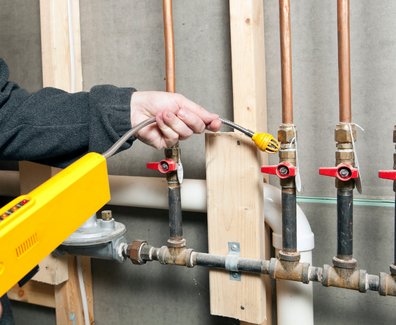
Connecting a fixed outdoor gas line for a BBQ, patio heater, or fire pit is regulated work. Size and length matter. An undersized line starves the appliance, and an unpermitted one leaves you exposed if anything goes wrong. The work needs either a homeowner permit on your own detached home or a licensed gas fitter. The same is true when you add a line for a gas range, dryer, or a tankless or storage hot water tank.
Myth: “If I do it myself, my insurance is fine.”
Unpermitted gas work is one of the fastest ways to void a home insurance claim. If a fire or leak is traced back to gas work that was never permitted or inspected, an insurer can deny the claim entirely — a risk that dwarfs any labour you saved. A permit and inspection create the paper trail that protects you.
Myth: “A handyman can run my gas line for cash.”
This is the most dangerous misconception. The moment you pay anyone who is not a licensed gas fitter, the work is illegal regardless of how skilled they seem. Paid gas work in BC must be done by a Technical Safety BC certified gas fitter working under a licensed contractor, with no exceptions.
When you should call a licensed gas fitter
Even where the homeowner exemption technically applies, most people are better served by a professional. Sizing a line correctly, pressure-testing the system, and getting it inspected the first time is faster and safer than learning on a live fuel system. Call a licensed gas fitter whenever any of these apply:
- The work is in a rental, duplex, townhome, or strata. The homeowner exemption simply does not cover you, and the job must be done under a licensed contractor.
- You are tying into the system for a furnace, boiler, tankless water heater, or gas fireplace, where appliance venting and combustion air also have to be right.
- You need an underground or longer run to a detached garage, suite, or outdoor kitchen, where trenching depth and line sizing are easy to get wrong.
Vision Plumbing Heating Cooling has provided licensed gas line installation across Kelowna, West Kelowna, and Vernon since 1986, and our gas fitters are certified through Technical Safety BC. We pull the permit, size and install the gas line, pressure-test it, and arrange the inspection so the work is documented and safe. If you’re also weighing a new gas appliance, our team can walk you through the full range of residential gas services in one visit, alongside the rest of our residential plumbing work.
The bottom line
Can you install your own gas line in BC? On your own detached home, with a homeowner gas permit and no paid help, sometimes the answer is yes. In almost every other case, and for almost everyone’s peace of mind, the work belongs with a licensed gas fitter who pulls the permit, sizes the line, and gets it inspected. Gas is one area where the safe path and the smart path are the same path. When you’re ready to add or alter a gas line in Kelowna, West Kelowna, or Vernon, our certified team is here to do it right. Contact Vision Plumbing Heating Cooling to get a quote on your gas line installation.
Frequently Asked Questions
Yes. New gas lines and alterations are regulated work under the Gas Safety Regulation and require a permit before the job starts. If you own and live in a fully detached home, you may be able to apply for a homeowner gas permit yourself; otherwise a licensed gas contractor applies on your behalf. Check the TSBC jurisdiction tool to confirm whether Technical Safety BC or your local municipality issues permits for your address.
As a general guideline, residential underground gas lines are commonly buried around 18 to 24 inches deep, but the correct depth depends on the line, the route, and local conditions. A licensed gas fitter confirms the depth and protection required for your specific installation.
Unpermitted regulated gas work can result in enforcement action from Technical Safety BC, and it can void your home insurance if an incident is ever linked to it. The cost and risk almost always outweigh the labour you would have saved.
On a fully detached home you own and live in, yes — provided you obtain a homeowner gas permit before the work begins and no one is paid to help. That exception is narrow and applies only to owner-occupied detached dwellings. Rentals, strata units, duplexes, and townhomes are excluded, as is any work where you hire assistance. Even where it technically applies, most homeowners hire a licensed gas fitter: sizing a live gas system and passing inspection correctly is not something to learn on the job.
Only on a fully detached home you own and live in, under a homeowner gas permit, with no paid help. Even then, furnace work involves venting and combustion air requirements under the Gas Safety Regulation that are easy to get wrong. For safety and warranty reasons, most homeowners hire a licensed gas fitter for appliance connections.